
What is McBling Cinema?
Consumer Aesthetics as film interpretation

The notion of genres and movements categorises cinema, as it does with music, into neat categories for packaging. This is always the fear with creating a label, which can enact the very qualities it aims to critique. At the same time, there is an abundance of labels for film. So why another one?
Genres such as ‘comedy’ or ‘thriller’ encode particular types of moods and conventions that stretch across a large expanse of the history of cinema. Others, such as ‘film noir’ emerge retrospectively in criticism to describe more specific collections. Movements such as French New Wave or Dogme 95 are even more specific, centre around a number of figures, often in a particular location, and engage within a specific and deliberate discourse. Sometimes, modes of cinema emerge in criticism without any intent from the creators, such as the case of New French Extremity or American Eccentric Cinema (Wilkins 2019)1. Nevertheless, films released within a period of time may engage with similar affects, themes, and discourses that transcend cinema. In examining cinema, therefore, there is a need to view it as a subset of other post-media movements in cultural systems—for example, as parts of consumer aesthetics.
Why consumer aesthetics? The term consumer aesthetic comes from the Consumer Aesthetic Research Institute (CARI), which itself emerged from crossovers of Tumblr and the Weird Facebook subculture. An aesthetic (plural: aesthetics) is a way of organising a collection of objects and concepts and motifs around a unified feeling or community. Although art history may use the term aesthetic to denote style—as in ‘Victorian aesthetic’ or ‘Bauhaus aesthetic’—CARI’s usage of aesthetic comes directly from the term’s usage within Vaporwave, a music genre whose visual component consists of repurposing ads of 1980s and 1990s technology, and where aesthetic itself in its stylised, full-width form denotes a particular adherence to the ‘Vaporwave aesthetic’. Aesthetic in this sense is different from the philosophy of Aesthetics, which concerns the conditions, structures and evaluation of sensory perception and artistic judgment. Consumer meanwhile derives from the notion of the observer of standardised aesthetic experiences, as described by Adorno and Horkheimer in the culture industry (Adorno and Horkheimer 1947). As Félix Guattari had observed in 1990, with the emergence of the post-media condition, the distinction between data, TV and cinema has become lost as all begin to influence one another. He elaborates:
There is a decentering of the image outside the subject; the image finds itself embodied in a symbolic field… Images are present in contemporary cognition. New schemas are generated by computational thinking and computer assistance. (Guattari 1990 [2026])
This condition creates formations of style that traverse all kinds of media, including not only cinema, television, and music, but parts of the built environment, such as industrial design, interior design and architecture. Consumer aesthetic, in CARI’s usage, then refers to such a formation: an aesthetic arranged for the passive observer.
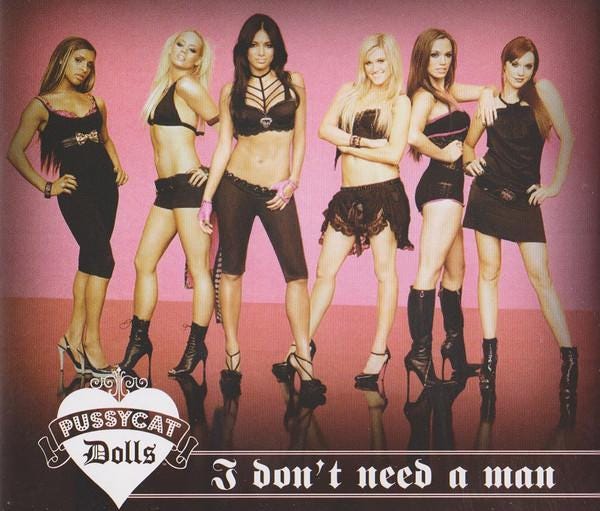
McBling is a term coined by Froyo Tam to describe the visual and symbolic culture—the consumer aesthetic—that largely displaced Y2K Futurism. McBling came from a Facebook group originally called Post-Y2K Aesthetics, in which differential analysis was performed on aesthetic orders that clearly occurred after Y2K Futurism. Establishing itself around 2000 and reaching a terminal point around 2008, McBling encapsulates in its name one of the central ironies of the period: the duality of extravagant, excessive, showy luxury (bling) and its nearly banal and trashy ubiquity in global consumerism (Mc as in McDonald’s). Bling comes from ‘Bling Bling’, a term popularised by the New Orleans-based rap supergroup Cash Money Millionaires, which exploded into the mainstream in the 1999 song ‘Bling Bling’ by B.G. The term entered the Oxford English Dictionary in 2003 to describe ‘elaborate jewellery, clothing, or possessions, or the flashy lifestyle associated with them’. Mc on the other hand connects to a discourse on global consumer culture and cultural homogenisation of neoliberalism that emerged with the end of the Cold War. The term McWorld by Benjamin Barber is a vital precursor (Barber 1995), although by the 2000s, the Mc prefix had become productive, being applied to other globalised, cheaply produced, pseudo-luxurious commodities, such as, notably, McMansions.
Today, McBling forms part of public recollection of the Y2K era; in fashion circles, it has become virtually synonymous. Perhaps there is the question of, why McBling cinema and not Y2K cinema? However, McBling as an assemblage encodes discourses and attitudes which transcend a mere period of time. It is essential to look beyond pure decades. While design was once defined by monarch regimes (Victorian, Edwardian, etc.) or larger eras (Renaissance, Baroque), the practice of delineating styles by decade emerges from a shift in post-war mass media and art history to capture rapidly shifting styles and enforce planned obsolescence (‘Roaring Twenties’). Perhaps this is a form of compression, which served the neat categories of style at the time. While the propagation of styles and subcultures has only accelerated, our ability to disseminate and archive historical styles has also increased. There is an imperative for granularity.
What separates McBling Cinema from mere early 2000s or Y2K cinema is the way a particular perspective is encoded—a sort of attitude or demeanour emerges in these cultural products. The films tend to engender a cynical outlook which surfaces as ironic, caustic, crude, raunchy, and spectacular humour, often disguised as ‘camp’ or ‘satire’. The sentiment seemingly recalls what J. Hoberman termed ‘vulgar modernism’, a self-reflexive tendency in media in the 1940s to 1960s: ‘lowbrow works … heavily embedded with intertextuality … [that] crack the veneer of acceptable materialism and frenzied consumption in mid-century American society’ (Park-Primiano 2016). If McBling Cinema continues this self-reflexive tendency, it redirects it towards conditions of the then newly-established global neoliberal order. Many of the discourses that inform McBling as a cultural formation, particularly in America, have been best described by Colette Shade’s book entitled Y2K: How the 2000s Became Everything (Shade 2025). These include the mainstreaming of hip hop; the sexual culture of the 2000s; mythologisation of the fashion industry and image culture; Bush-era petro-imperialism and War on Terror; tabloid celebrity culture and paparazzi; ‘democratisation’ of fame, especially through reality television; status culture and consumer excess; and so on.
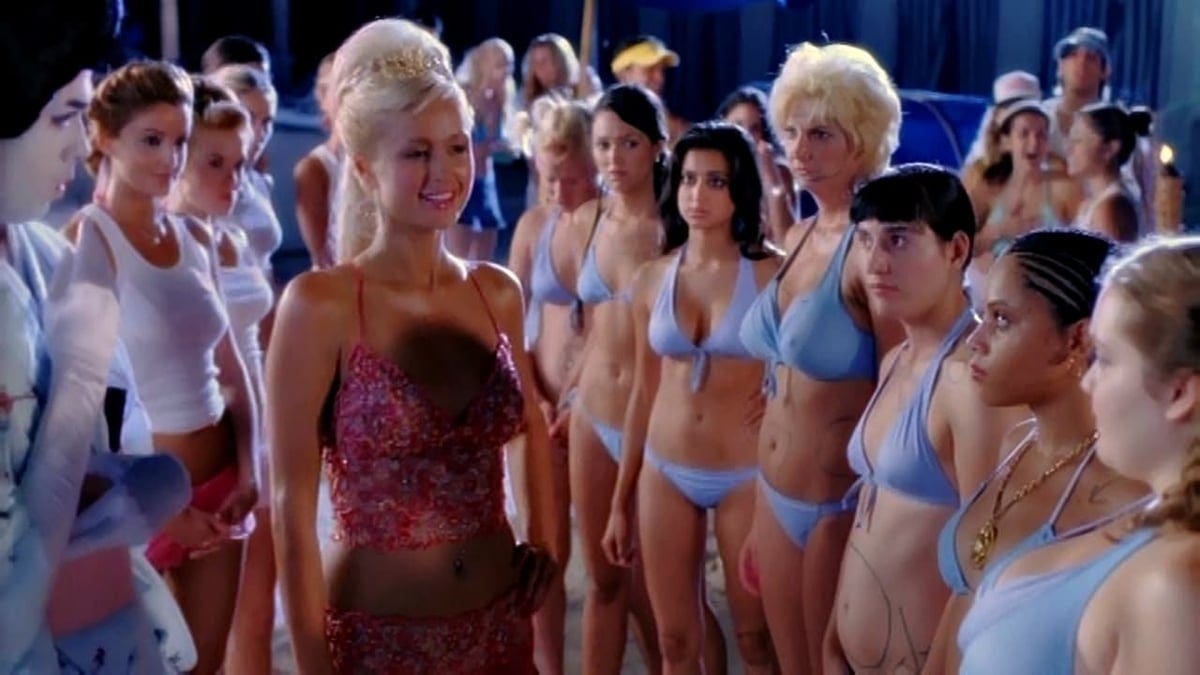
Alongside its attitude and discourses, McBling Cinema functions as a type of assemblage—a constellation of elements with no fixed membership, held together by family resemblance rather than defining conditions. Although the qualities are porous and contextual, some recurring motifs in McBling Cinema include: breakdancing and dance battles, often gratuitous; injection of hip hop into seemingly incongruous moments; tours of lavish spaces in the style of MTV Cribs; class signifiers as signs of villainy (McMansions, SUVs); scenes involving pirates and/or boats; hostage situations; jarring tonal shifts; shopping and clothing montages; autocriticism of the fashion and/or film industries; in-universe elevation of otherwise regular main characters to celebrity status; often forced and cynical display of multiculturalism; destruction of mid-century sets; an ironic engagement with aesthetics of the 1970s, especially disco and the ‘Golden Age of Porn’. Against these motifs, a slew of characters also recurs in McBling: naïve Pygmalion characters, orphans, hypersexual old women (‘cougars’), deliberately tokenised ‘token minorities’, ambiguously bisexual characters, sleazy old men—particularly in the vein of Hugh Hefner and Jeffrey Epstein, Michael Jackson figures, George W Bush figures, and so on.
These are only some motifs and some very American ones at that. Yet McBling Cinema concerns a global pop culture condition, spread through ‘mediascapes’. As Arjun Appadurai introduces the term, ‘mediascapes’,
… whether produced by private or state interests, tend to be image-centred, narrative-based accounts of strips of reality, and what they offer to those who experience and transform them is a series of elements (such as characters, plots and textual forms) out of which scripts can be formed of imagined lives, their own as well as those of others living in other places. These scripts can and do get disaggregated into complex sets of metaphors by which people live … as they help to constitute narratives of the ‘other’ and proto-narratives of possible lives, fantasies which could become prolegomena to the desire for acquisition and movement. (Appadurai 1990)
Through such cultural flows, consumer aesthetics also become localised (or perhaps were ‘glocal’ to begin with), which calls for an examination of McBling Cinema in all of its local and global registers, broadly dealing with themes of fashion and cinema empires, globalisation, celebrity culture, and consumerism. Although some works like Tetsuya Nakashima’s Kamikaze Girls (2004) and Memories of Matsuko (2006) come to mind, I will leave these manifestations to others to explore more in-depth.
My research into what I called McBling Cinema started in 2016 when Evan Collins2 and I would meet regularly to watch a particular strain of comedies from the early 2000s, observing recurring tropes. Although some films such as Mean Girls (2004) never faded from praise, there were many other films of this cohort that remained underexamined. These films included Garfield: A Tale of Two Kitties (2006), Boat Trip (2002), National Lampoon’s Pledge This! (2006), From Justin to Kelly (2003), Scooby Doo 2: Monsters Unleashed (2004), Lovewrecked (2005) among many others. Through this research, we aimed to establish a loose canon of cinematic works that best represented and shaped the McBling consumer aesthetic throughout its evolution, especially beyond the more restricted interpretation centred around so-called ‘chick flick’ films like 13 Going on 30 (2004), Mean Girls (2004), Legally Blonde (2001), The Devil Wears Prada (2006), and so on. While these films rightfully are seeing critical re-evaluation, especially through feminist media scholarship, there is room for a broader view of their discourses. This way, we could see how cinema serves as vectors for aesthetic material, establishing views into interior design, fashion, architecture, and so on, both engaging in aesthetic discourses yet reinforcing their cultural values and messages.
The purpose here is to establish the precedent of McBling Cinema as a term, in order to enact an interpretive framework that takes consumer aesthetics as semiological systems, allowing for the creation of other cinemas, such as Gen X Soft Club Cinema, Frutiger Aero Cinema, and so on. This enacts an approach which Umberto Eco refers to as ‘semiological guerilla warfare’ (Eco 1986); by intercepting media at its point of reception, this rhizomatic approach allows for ambient, buried meanings to come to the forefront.
In the future, I will be examining McBling films as aesthetic products in this way, revealing overlooked logic that underlie a number of films from this period. For example, The Life Aquatic with Steve Zissou (2004), beyond all the Wes Andersonian surface, is at its core a McBling film: it is first and foremost an examination of celebrity culture, depicting film circuits and red carpets—Zissou’s fixation on film narrative colours all of his relationships, most of all with Ned, the orphan who may or may not be his son, taken in as a counter-Oedipal Pygmalion; Zissou’s rival is quintessential McBling: bisexual, charismatic, and most importantly, rich; the tour of the boat echoes MTV Cribs; it has a dance scene, albeit an understated one; its use of bossa nova appears to be a Wes Andersonian response to hip hop through deliberately outmoded signifiers, etc. Likewise, a film like Todd Solondz’s Storytelling (2001), through its sparse and disparate deadpan examination of celebrity in the desert of suburbia subverts many discourses of McBling Cinema. What is important then is not to simply observe these similarities—or risk fixating only on surface—but tie them intertextually into other McBling texts through a critical lens.
This framework is particularly potent for interpreting works like Friedberg and Seltzer’s Epic Movie (2007) which seem to deal almost wholesale with McBling signifiers at the moment of the aesthetic’s collapse. While Epic Movie is disparaged as an empty work, I have come to view it as a crucial McBling text and unusually adept at deconstructing its semiosis and therefore that of other consumer aesthetics. This is an angle which I have been exploring for the past year through an ongoing project of which I will publish parts soon. Part of this is personal—I am fascinated by the taste regimes of cinema and what is deemed ‘good’ or ‘bad’. Films like Life Aquatic or Epic Movie have deeply entrenched themselves in my mind, perhaps because of their lukewarm reception, or in the case of the latter, intense revulsion.
Mark Fisher once claimed the period of roughly 2003 to 2014 will be regarded as ‘the worst period for (popular) culture since the 1950s’ (Fisher 2014). Whereas he diagnoses the cultural poverty marked by repetition and nostalgia as he searches for ‘lost futures’, I encourage deliberate re-evaluation of works through transmedia aesthetic lenses. In the previous regime of signal to noise, signal risked being seen as noise. Perhaps today’s literacy is one where everything is signal.
References
Adorno, Theodor, and Max Horkheimer. 1947. Dialectic of Enlightenment. New York: Herder and Herder.
Appadurai, Arjun. 1990. “Disjuncture and Difference in the Global Cultural Economy.” Theory, Culture & Society 7 (2–3): 295–310.
Barber, Benjamin. 1995. Jihad vs. McWorld. New York: Times Books.
Eco, Umberto. 1986. “Towards a Semiological Guerrilla Warfare.” In Travels in Hyperreality, 135–144. San Diego: Harcourt Brace Jovanovich.
Fisher, Mark. 2014. Ghosts of My Life: Writings on Depression, Hauntology and Lost Futures. Winchester: Zero Books.
Guattari, Félix. (1990) 2026. “The Image Machine.” Translated by Ethan Spigland. e-flux Notes, May 1, 2026. https://www.e-flux.com/notes/6783490/the-image-machine.
Park-Primiano, Sueyoung. 2016. “Vulgar Modernism.” Routledge Encyclopedia of Modernism. https://doi.org/10.4324/9781135000356-REM354-1.
Shade, Colette. 2025. Y2K: How the 2000s Became Everything. New York: HarperCollins.
Wilkins, Kim. 2019. American Eccentric Cinema. New York: Bloomsbury Publishing Inc.
I would like to see American Eccentric Cinema perhaps expanded into an international if not global mode that encompasses similarly eccentric films. For example, films about Japanese suburbia around the same time, such as the work of Satoshi Miki, Yoshihiro Nakamura, and Naoko Ogigami, seem to engage with a similar discourse.
Of the Y2K Aesthetics Institute and fellow founder of Consumer Aesthetics Research Institute.
Ahh I love this! The discussion about how mcbling showed up in pop culture/film is so interesting to me too, especially because these were my childhood movies…in the realm of TV I think “Entourage” might be the quintessential McBling show haha